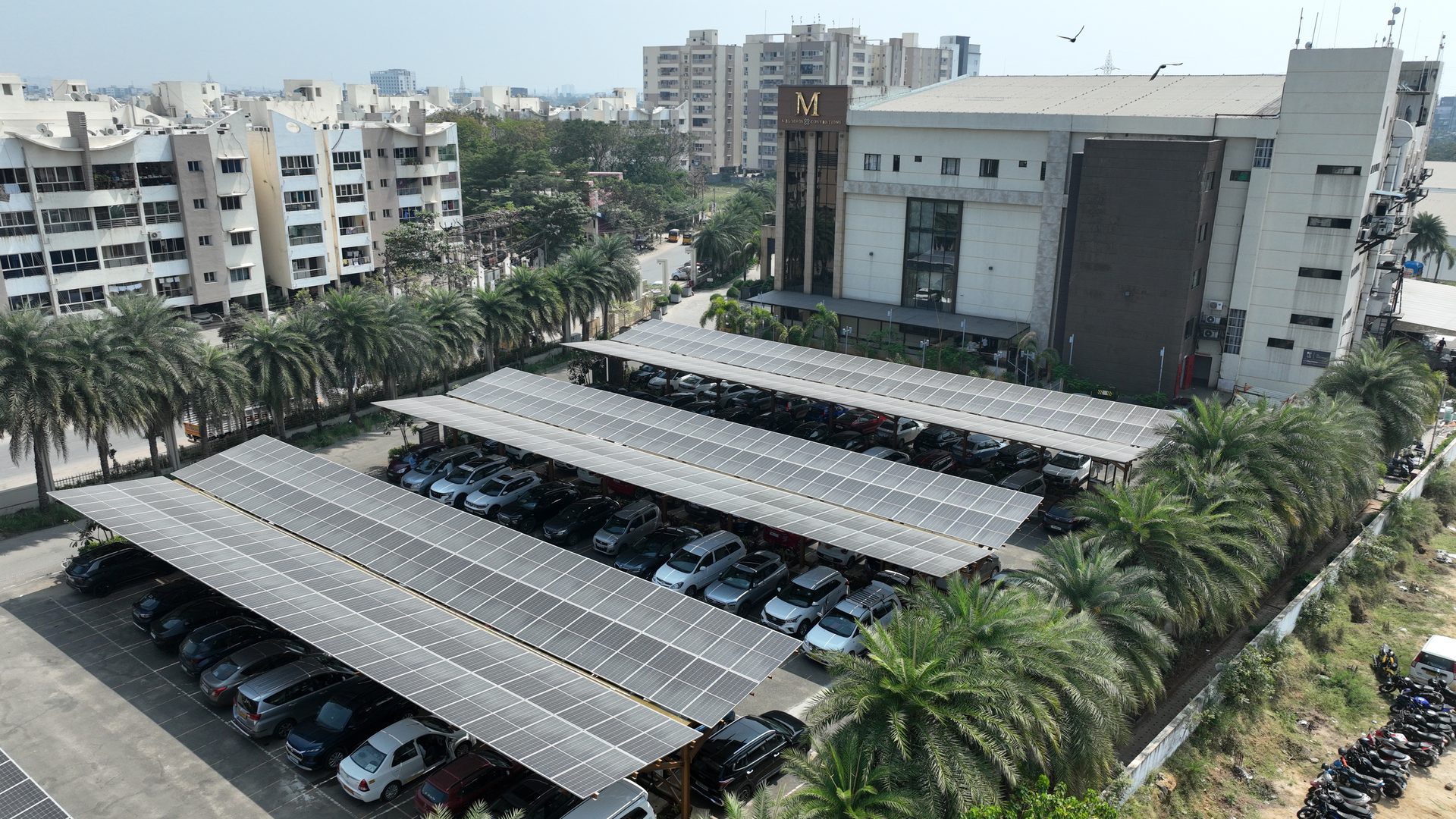
Your Parking Space Is a Power Plant
Solar Carports let homes, businesses and campuses generate clean electricity right where their vehicles park - protecting cars from the sun while harvesting it at the same time.
Typical Residential Cost(₹) (2 - 4 KW) | Average Panel Lifespan | Typical Bill Reduction |
|---|---|---|
₹ 3,00,000 - ₹ 6,00,000 | 25 Years(Warrenty) | 30% - 40% |
What is a Solar Carport?
A solar carport is a covered parking structure whose roof is made entirely or partly from solar panels instead of traditional roofing material. It does two jobs at once. It shelters your vehicle from sun, rain and bird droppings and it harvests the same sunlight as usable electricity
Think of it as solar rooftop system, but built over a parking space rather than bolted onto your existing roof. Because it's a freestanding structure. It works even when your rooftop is shaded, sloped in the wrong direction or already fully occupied by existing panels.
Why it matters in India: India receives 4–6 peak sun hours per day on average. A 3 kW solar carport in a city like Chennai can generate roughly 12–15 units of electricity daily — enough to run a typical home's air conditioning, lighting, and appliances, with surplus left over.
How a Solar Carport Generates Electricity
1. Panels absorb sunlight
Photovoltaic (PV) panels on the carport roof absorb photons from sunlight and convert them into DC (direct current) electricity.
2. Inverter converts the current
A solar inverter converts the DC output into AC (alternating current), which is what your home appliances and the electricity grid use.
3. Power flows where it's needed
Electricity first powers your on-site loads — lights, fans, equipment. Any surplus is either stored in a battery bank or fed back into the grid (net metering).
4. EV Charging
Many modern carports include integrated EV chargers, letting you power your electric vehicle directly from the sun.
Key Benefits of Solar Carports
Solar carports combine the value of a functional outdoor structure with the economics of a solar power plant. Here's what makes them compelling:
Clean Energy Generation
Generate electricity from unused outdoor space without occupying your rooftop or any additional land.
Lower Electricity Bills
Cut monthly electricity bill by 30% - 60% depending on system size, local tariffs and consumption patterns.
Vehicle Protection
Shielding cars from harsh summer sun reduces interior temperature significantly, extends paint life and protects interiors from UV damage.
Property Value Boost
Properties with solar installations consistently command higher resale and rental premiums in the Indian market.
EV-Ready Integration
Easily paired with EV chargers to create a self-sufficient charging station entirely by renewable energy.
Dual Land Usage
Parking areas that would otherwise be unproductive become active energy infrastructure - no new land required.
Types of Solar Carports
Solar carports aren't one-size-fits-all. The right design depends on your space, budget, and goals.
Residential Solar Carports
Designed for individual homes and villas, these are typically 2–5 kW systems covering one or two parking spots. They tie into your home's electrical panel and can be configured with battery storage for overnight use. Ideal for homeowners who want the benefits of solar without modifying their rooftop.
Commercial and Industrial Solar Carports
Larger installations over corporate parking lots, warehouses, shopping malls, and factories. Capacities typically range from 50 kW to several MW. These generate substantial on-site power, reduce peak demand charges, and signal visible sustainability commitment — particularly relevant for companies with ESG goals.
EV Solar Charging Carports
Specifically designed to integrate EV chargers — AC slow chargers or DC fast chargers — directly under the canopy. The solar panels generate power that first feeds the chargers before supplying the grid or building. Perfect for housing societies, office campuses, and hospitality properties as EV adoption rises in India.
Solar Carport vs Rooftop Solar : Which is Right for You?
Both are excellent solar installations. Your property's specifics usually decide the winner.
Factor | Solar Carport | Rooftop Solar |
|---|---|---|
Roof Requirement | Not Needed | Must Be available and Suitable |
Panel angle flexibility | Fully optimisable | Limited by roof pitch |
Vehicle protection | Yes | No |
EV charging integration | Easy, direct | Possible but indirect |
Upfront cost | Slightly higher (structure) | Lower (no structure) |
Maintenance access | Easy ground-level access | Requires roof access |
Shading risk | Lower (open area) | Higher (neighbouring buildings, trees) |
Space needed | Open parking area | Flat/inclined roof |
Verdict: If you have open parking space, a carport is often the better choice — greater flexibility, lower shading risk, and the added benefit of vehicle protection. If your parking is enclosed or underground, rooftop solar wins by default.
How Much Does a Solar Carport Cost in India?
Costs vary by system size, panel quality, mounting structure complexity, and whether battery storage is included. Here's a realistic ballpark for 2026:
Single Car (1 - 2 KW) | 2 to 4 Cars (3 - 5KW) | Small Commercial Parking (10 - 25KW) | Large Commercial Parking (50KW+) |
|---|---|---|---|
₹ 2,00,000 - ₹ 3,00,000 | ₹ 3,50,000 - ₹ 7,00,000 | ₹ 7,00,000 - ₹ 20,00,000 | >₹ 20,00,000 |
Typical Payback Period
Most residential solar carports in India see a payback period of 4–7 years, depending on local electricity tariffs and consumption. After payback, the system generates free electricity for another 18–20 years. With net metering policies in states like Tamil Nadu, Maharashtra, and Karnataka, excess power sold back to the grid can bring this window down further.
Subsidies & Incentives
The central government's PM Surya Ghar scheme offers subsidies of up to ₹78,000 for residential rooftop/carport installations up to 3 kW. State-level DISCOMs often provide additional incentives. Commercial installations benefit from accelerated depreciation benefits under the Income Tax Act, effectively reducing taxable income in the installation year.
Maintenance
Solar carports are low-maintenance. The main task is periodic cleaning — dust, bird droppings, and pollen accumulate and reduce output. In most Indian cities, a cleaning every 2–4 weeks keeps performance near peak. Annual professional inspections check electrical connections, mounting integrity, and inverter health.
Is a Solar Carport Right for You?
Open Parking Space
You have an outdoor parking area (even as small as one car space) that receives direct sunlight for most of the day.
High Electricity Bills
Your monthly bill is ₹3,000 or above — the higher your consumption, the faster the financial payback.
EV Owner or Planner
You already own an EV or plan to buy one in the next 3–5 years — solar carports make EV ownership far cheaper to run.
Rooftop Constraints
Your roof is shaded, structurally unsuitable or already fully utilised - the carport becomes your primary solar option.
Case Study : Mconventions 220KW Solar Carport, Ambattur
One of Chennai's most striking examples of commercial solar carport adoption sits right in the heart of Ambattur's busy convention corridor. Mconventions — a premium banquet and convention facility — partnered with Chennai-based installer Daystar Solar to transform their open parking compound into one of Tamil Nadu's largest solar carport installations, all without disrupting a single parking bay.
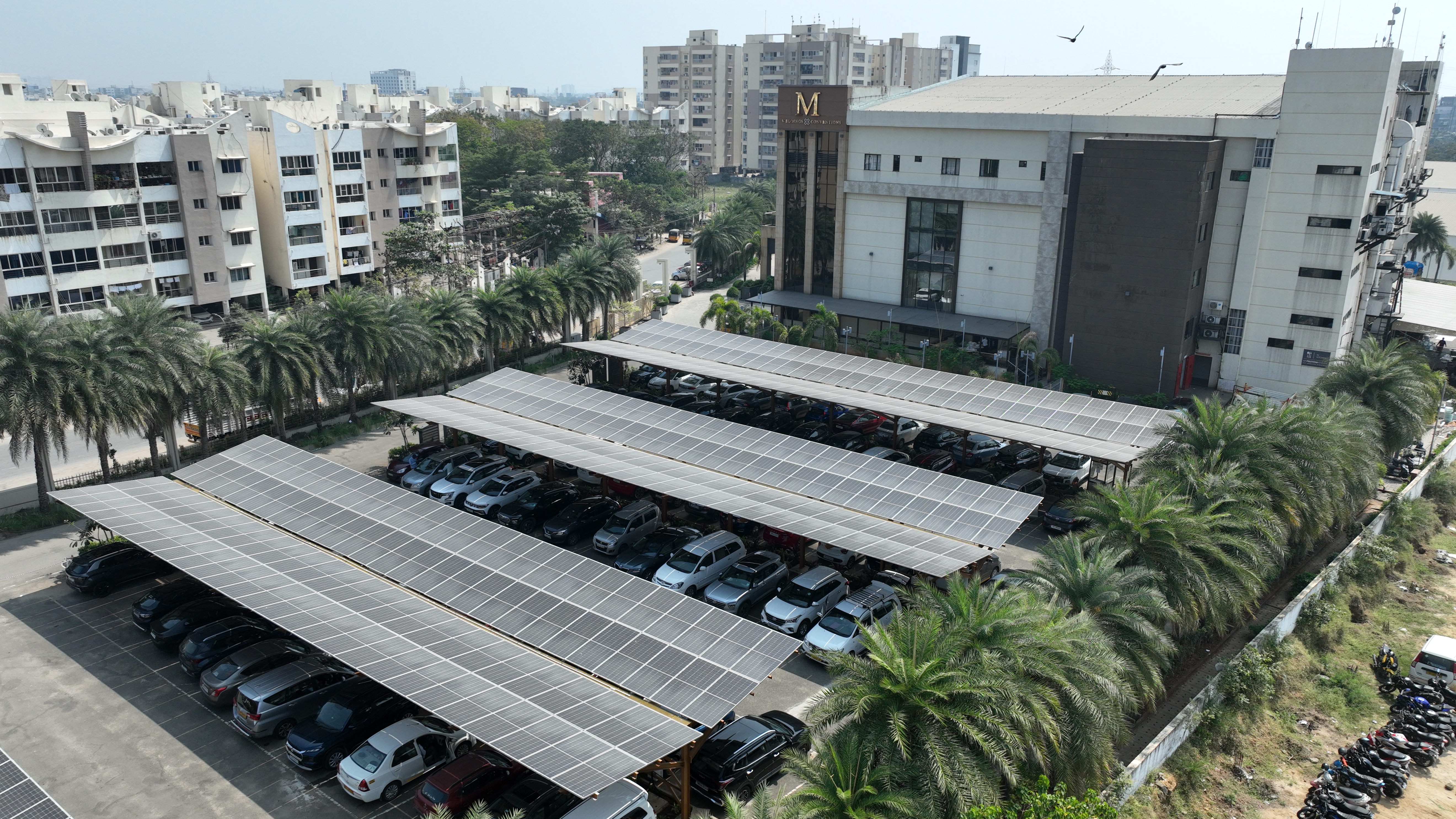
200KW On-Grid System Capacity | 20kW Hybrid system |
220kW Total installed capacity | ~2,80,000 Units generated per yea |
~230 T CO₂ offset per year | EV-ready Integrated EV charging stations |
The Challenge: High Daytime Loads, Unused Parking Space
Convention and banquet venues like Mconventions carry some of the most punishing electricity loads of any commercial property — industrial air conditioning, full-venue lighting, commercial kitchens, AV systems, and event production equipment all running simultaneously. Peak electricity demand routinely coincides with peak daylight hours, making solar an almost perfect match. Yet the building rooftop was largely unsuitable for panels due to HVAC equipment and structural constraints.
The solution was right underfoot: a sprawling open parking compound lined with palm trees, fully sun-exposed, and sitting idle as a solar opportunity. Daystar Solar designed a system that would work with the existing parking layout rather than against it — keeping every bay usable while turning the overhead space into an active power plant
The Solution: A Dual-System Architecture
Rather than a single system, Daystar Solar engineered a two-tier architecture that handles both base load and critical backup separately. The 200 kW on-grid system feeds directly into the venue's main distribution board via net metering, slashing peak-hour import from TANGEDCO and earning export credits when the venue is unoccupied. The separate 20 kW hybrid system — paired with battery storage — ensures that critical loads such as security systems, lighting, and EV chargers remain operational during grid outages, a common concern for event venues that cannot afford power interruptions mid-function.
Why a hybrid + on-grid split?
For venues with high continuous loads, a full on-grid system maximises financial returns through net metering. A smaller hybrid system layered on top adds resilience without the cost of battery-backing the entire load — an increasingly popular commercial design in Tamil Nadu.
EV Charging Integrations
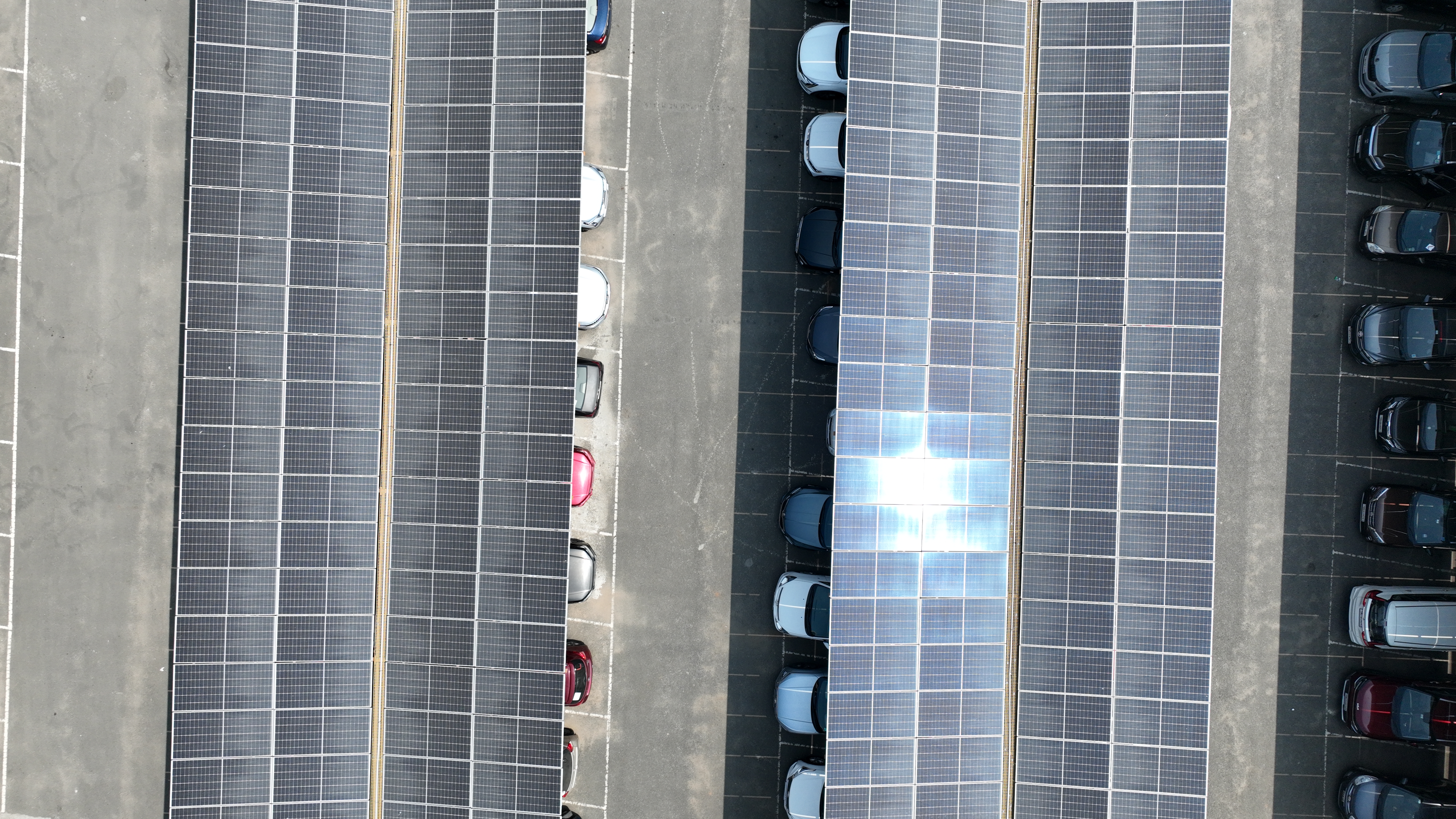
A portion of the solar generation is channelled to EV charging stations installed within the parking compound. As Ambattur's corporate belt increasingly sees employees and visitors arriving in electric vehicles, this positions Mconventions as a destination that not only hosts events but actively supports the sustainable commute of its guests. Solar-powered EV charging also opens the venue to additional revenue streams — public charging access during non-event hours — and qualifies for FAME II and state EV infrastructure incentive schemes.
Scale at a Glance
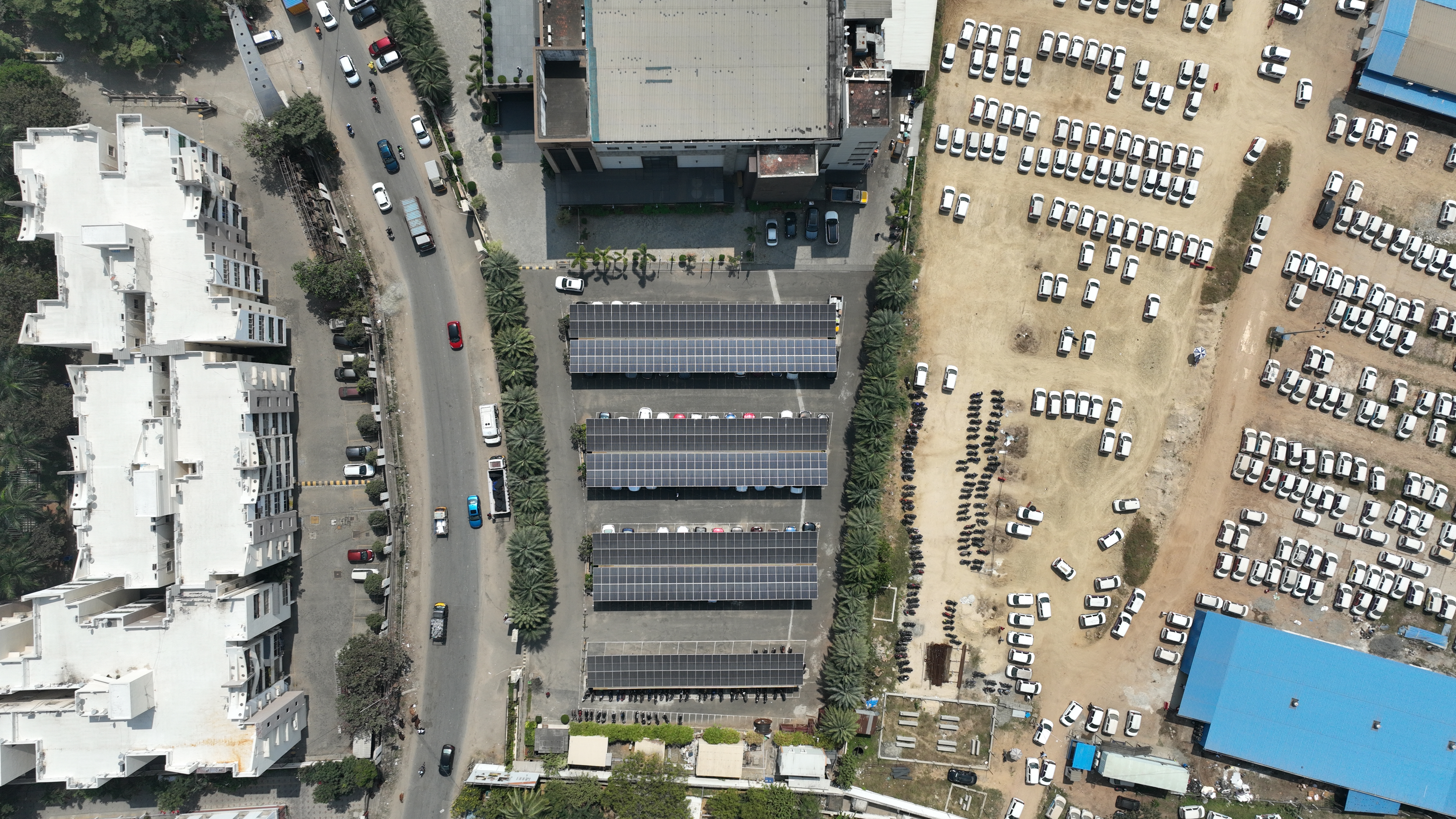
From the drone footage, the installation spans four parallel carport rows running east-to-west across the compound, each row accommodating two lanes of vehicle parking beneath a continuous solar canopy. The tilt angle has been optimised for Chennai's latitude (~13°N) to maximise annual generation across the city's long sunny season. High-efficiency monocrystalline PERC panels were selected to extract maximum output from the relatively compact footprint — a critical consideration when every square metre of panel area must also serve as functional shade cover.
Frequently Asked Questions
How many solar panels does a carport need?
A standard single-car solar carport (roughly 15–18 sq m of panel area) typically fits 6–10 solar panels of 400–450W each, giving you a 2.5–4.5 kW system. Larger two-car carports can fit 10–18 panels for a 4–8 kW installation.
Does climate affect solar energy
Yes, though output is reduced. Solar panels generate electricity from diffuse light — on overcast days you can expect 10–25% of peak output. During the Indian monsoon season, systems typically produce 30–50% of their dry-season monthly generation. Battery storage helps bridge these gaps.
Can I add solar carport to my existing home without a rooftop system?
Absolutely. A carport is an independent system that connects to your home's electrical panel just like a rooftop installation would. You don't need an existing solar setup, and it can be your only solar installation.
Do I need permission from my housing society or local authority?
For independent houses in Chennai, grid-connected solar systems require approval from TANGEDCO/TNPDCL for net metering. Municipal permits are generally not needed for standard rooftop installations. Apartment residents may need approval from their housing association. Most installers handle the approval process for you.
How long does installation take?
Physical installation typically takes 3–7 days for residential systems. The full process — including permits and DISCOM approval for net metering — usually takes 3–6 weeks. Commercial installations can take 4–12 weeks depending on size and approval timelines.