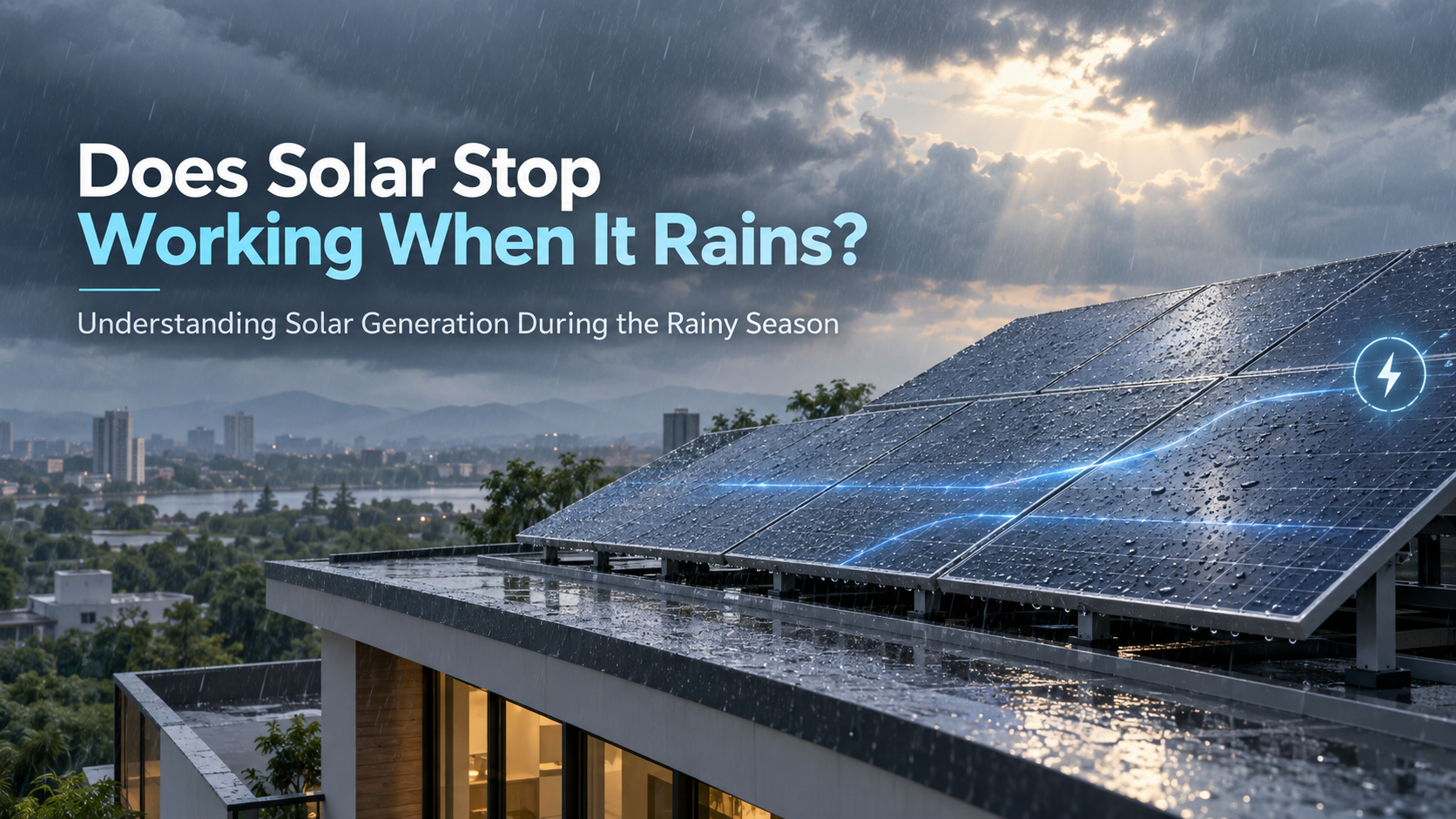
Many people believe that solar panels only work properly when the sun is bright and the sky is clear. But that is not true.
Solar panels can still generate electricity during cloudy and rainy weather because they work using sunlight, not heat.
Even during the rainy season, some sunlight still passes through the clouds and reaches the solar panels. The power generation may be lower, but the system does not completely stop working.
☀️ How Does Solar Generate Power During Rain?
Solar panels use photovoltaic cells to convert sunlight into electricity.
During rainy or cloudy conditions:
Direct sunlight becomes weaker.
Diffused sunlight still reaches the panels.
Solar panels continue producing electricity.
Power generation is usually lower than on a clear sunny day.
Quick Fact
Solar panels do not need extreme heat to generate electricity. They need light. This is why solar systems can continue working even when the temperature is cool or the weather is cloudy.
🌧️ Does Rain Reduce Solar Generation?
Yes. Heavy clouds and rain can reduce the amount of sunlight reaching the panels.
The actual solar output depends on several factors:
Cloud density
Rainfall intensity
Time of day
Panel orientation
Shading around the building
Solar module quality
Inverter efficiency
Overall system design
A light cloudy day may still provide reasonable generation, while very dark stormy conditions can cause a much larger reduction.
💧 Rain Can Actually Help Solar Panels
Rain is not always a disadvantage.
It can help remove some loose dust, pollen, and small particles that have collected on the surface of solar panels.
Benefits of Rain
Helps remove loose surface dust
Can temporarily improve panel cleanliness
Reduces some accumulated dirt
Helps keep the module surface cooler during wet weather
Important
Rain should not be considered a replacement for proper solar panel cleaning. Sticky dirt, bird droppings and heavy deposits may still require regular maintenance.
☁️ What Happens on Very Cloudy Days?
On heavily overcast days, solar panels receive much less sunlight.
As a result:
Clear sunny day → Higher generation
Light cloudy day → Moderate generation
Heavy cloudy or rainy day → Lower generation
The system automatically responds to the available sunlight. Once the weather becomes brighter, generation increases again.
📊 Why One Rainy Day Does Not Decide Solar Performance
Solar systems should not be judged based on their performance during one cloudy or rainy day.
What matters more is the total electricity generated throughout the year.
A properly designed solar plant considers:
Summer conditions
Monsoon periods
Winter sunlight
Seasonal changes
Local weather patterns
Annual electricity consumption
Think Long-Term
Solar investment is based on annual energy generation, not the output of a single day.
🏭 What About Commercial and Industrial Solar Plants?
For factories, hospitals, malls, offices and commercial buildings, the same principle applies.
Even during the rainy season, rooftop solar systems can continue contributing to the building's electricity requirements.
Proper system sizing becomes especially important for commercial installations.
Key considerations include:
Monthly electricity consumption
Daytime operating hours
Available rooftop area
Seasonal generation
Grid availability
System maintenance
Monitoring and performance analysis
🛠️ Does Rain Damage Solar Panels?
Quality solar panels are specifically designed for outdoor installation.
They are built to withstand:
Rain
Wind
Heat
Temperature changes
General outdoor weather conditions
However, the complete solar system must also be properly installed.
Important areas include:
Waterproof electrical connections
Proper cable management
Strong mounting structures
Correct earthing
Inverter protection
Regular inspections
Installation Matters
Good-quality equipment combined with professional installation is essential for long-term solar performance.
🔍 How to Maintain Solar During the Rainy Season
Solar plant owners should continue checking the system even during monsoon months.
Recommended Checks
Monitor daily solar generation.
Check inverter alerts.
Inspect panels after heavy storms.
Look for water accumulation around electrical equipment.
Ensure drainage areas remain clear.
Inspect mounting structures.
Schedule professional maintenance when required.
Regular monitoring can help identify problems before they cause major generation losses.
🌤️ Sunny Season vs Rainy Season
Condition | Solar Generation |
Bright sunny day | High |
Partly cloudy | Moderate to high |
Cloudy | Moderate to low |
Light rain | Lower generation |
Heavy rain / dark clouds | Significantly reduced |
After weather clears | Generation increases again |
The exact output varies depending on the solar plant and local conditions.
✅ The Simple Answer
Yes, solar panels can generate electricity during the rainy season.
They may produce less electricity because less sunlight reaches the panels, but solar generation does not completely stop simply because it is raining.
Final Thought
Rainy weather is a normal part of seasonal solar performance.
A professionally designed solar system considers these variations and focuses on total annual energy generation and long-term savings.
Rain or Shine, Solar Keeps Working
With the right design, quality equipment and regular maintenance, your rooftop solar system can continue producing clean energy throughout the year.