Installing a solar system is a long-term investment. But after installation, many owners simply assume the system is performing well as long as the panels are producing electricity.
In reality, a solar plant can continue working while still producing less energy than expected. Regular monitoring helps identify performance issues early and ensures that your investment continues to deliver maximum value.
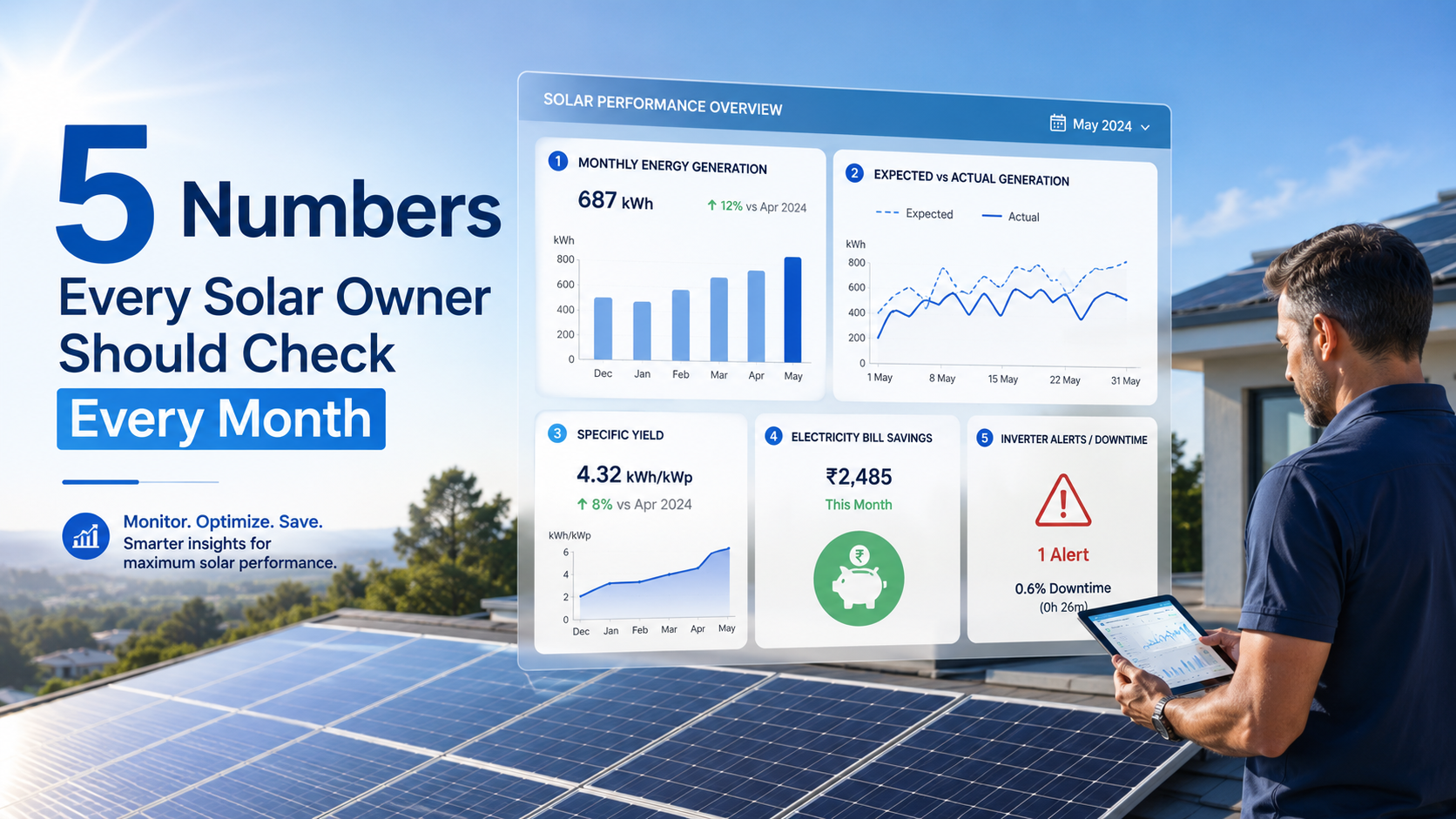
Here are five important numbers every solar owner should check each month.
1. Monthly Energy Generation
The first number to check is the total electricity generated by your solar system during the month, usually measured in kilowatt-hours (kWh).
Compare the generation with previous months. Seasonal changes are normal, but a sudden or unusual drop may indicate problems such as dust accumulation, shading, inverter issues, loose connections, or panel damage.
Tracking monthly generation helps you understand how consistently your system is performing.
2. Expected vs Actual Generation
Every solar plant is designed with an estimated generation potential based on its capacity, location, sunlight availability, and system design.
Comparing your actual generation with the expected output helps identify whether the plant is performing close to its potential.
A small variation can occur because of weather conditions, but continuous underperformance may require a professional system inspection.
3. Specific Yield
Specific yield measures how much electricity your solar system generates for every kilowatt of installed capacity.
For example, instead of only looking at the total units generated, specific yield helps determine how efficiently the plant is performing regardless of its size.
Monitoring this number month by month can make it easier to identify changes in performance.
4. Electricity Bill Savings
One of the main reasons for installing solar is to reduce electricity expenses.
Every month, compare your current electricity bill with your earlier consumption and bills. This allows you to understand how much solar is actually contributing to your savings.
If your electricity bill suddenly increases even though your usage pattern has not changed much, it may be worth checking whether your solar system is producing as expected.
5. Inverter Alerts and System Downtime
The inverter is one of the most important components of a solar system. It converts the electricity produced by the solar panels into usable power.
Modern inverters can display faults, warnings, generation data, and system status.
Ignoring an inverter alert for several days can result in significant energy loss. Even if the panels are in perfect condition, the system may not deliver power properly when the inverter has a fault.
Checking inverter notifications regularly can help identify problems before they become expensive.
Why Monthly Monitoring Matters
Solar panels are designed to operate for many years, but their performance can be affected by several factors such as dust, weather, shading, electrical faults, equipment ageing, and maintenance conditions.
Regular monitoring allows solar owners to detect unusual changes early instead of discovering the problem only after receiving a high electricity bill.
It also helps maintain consistent generation and protect the long-term return on the solar investment.
Final Takeaway
Owning a solar plant is not only about having panels on your roof. It is also about understanding how well the entire system is performing.
By checking monthly generation, expected vs actual output, specific yield, electricity savings, and inverter alerts, solar owners can stay informed about the health of their system and take action when needed.
A few minutes of monitoring every month can help protect years of solar savings.